Environmental and Social Sustainability – We have achieved a great deal and have big plans for the future
Since the 2000s, the Zürcher Theater Spektakel has systematically pursued ecological and social sustainability. Since 2008, we have continuously reduced our environmental impact. Following intensive efforts to improve accessibility, the Zürcher Theater Spektakel received the «Kultur inklusiv» label in 2019. In 2019, we began integrating diversity more systematically into our organisational development. In 2023/2024, we carried out a comprehensive carbon and climate assessment to identify further potential for improvement. With average emissions of around 8 kg CO₂ per visit, the environmental footprint of the Zürcher Theater Spektakel is lower than that of many other festivals and cultural institutions. We are currently working on a report examining our efforts across broader dimensions of sustainability.
Programme
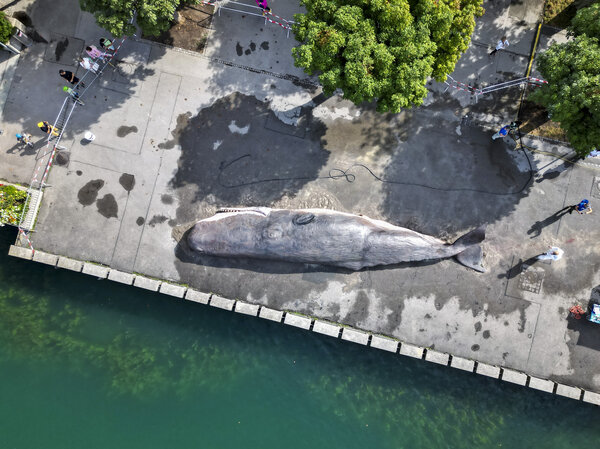
Through its socially engaged programme, the Zürcher Theater Spektakel regularly draws attention to sustainability issues and offers opportunities for information, reflection, dialogue and new perspectives. As an international festival, it brings together artists who engage, from their own contexts, with issues such as climate change, resource consumption, migration, social inequality, diversity, postcolonial questions and different ways of living together. Artistic interventions in public space – such as the beached whale at Utoquai in 2024 or the floating SUVs on Lake Zurich in 2025 – brought these issues into the public realm and reached a wider audience.
Infrastructure and Resources
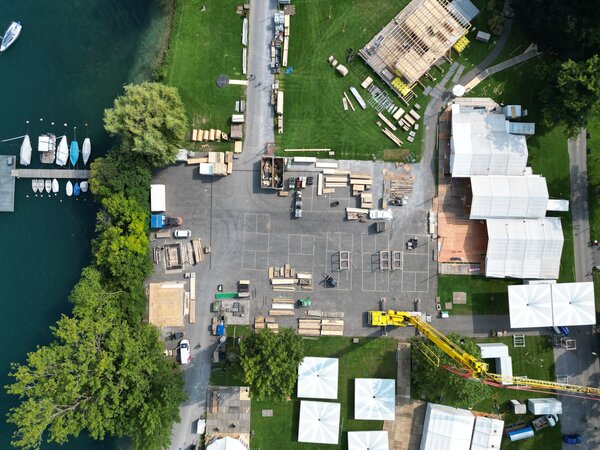
We prioritise durable and resource-efficient solutions in our infrastructure, use of materials and logistics. Most of the festival infrastructure is assembled and dismantled each year, stored and reused. Furniture, equipment and vehicles are largely rented and used multiple times rather than newly purchased.
Gastronomy
The restaurant operators prefer to work with local suppliers from Zurich and the surrounding area, as well as with regional produce. This applies to fruit and vegetables and, in particular, to meat. For several years now, the menu has increasingly focused on vegetarian and vegan dishes. The ‘Ensemble’ restaurant, in collaboration with the ZHAW, has developed the ‘World Globe Menus’ concept, which provides guests with a simple guide to the sustainability and intergenerational compatibility of their dishes.
Crockery and cutlery are washed on site and reused. Where this is not possible, recyclable containers are used. Waste is separated into recyclable materials, organic waste and food scraps (Kompogas), and residual waste, which is incinerated. Waste sorting stations make it easier for both guests and staff to sort their waste. The catering establishments monitor the sorting of waste from their premises. In this way, they ensure that recyclable materials are as free as possible from contamination and that disposal is energy-efficient. By placing joint orders, the number of delivery journeys is kept to a minimum.
Local drinking water
Since 2022, thanks to the generous support of Zürcher Kantonalbank, we have been able to provide our visitors with mobile drinking water stations by trinq on the Landiwiese. With this, we want to contribute to reducing the consumption of PET bottles. Producing a 0.5-liter PET bottle consumes 3 deciliters of petroleum and 4 liters of water. Here you can track how many PET bottles can be saved daily by the water stations on the Landiwiese and throughout Switzerland.
Energy
As a summer festival operating in temporary structures, our energy consumption is relatively low, as there is no need to heat or cool buildings year-round. Nevertheless, we continue to take measures to reduce our environmental impact. Solar power is used throughout the festival. String lights, work lights and decorative lighting use energy-saving, long-lasting LED technology.
Mobility – Team and Artists
Artist travel and programme scouting trips are essential to an international festival. At the same time, we aim to make mobility as climate-friendly as possible. In our day-to-day work, we travel by bike or public transport whenever possible. Many meetings take place in a hybrid format to reduce the need for travel.
Artists and team members travel by train whenever feasible, while flights are subject to distance and travel-time thresholds. Team travel is often combined with performance visits, meetings and local exchanges. For international productions, we collaborate with other festivals to coordinate touring and make travel more efficient.
Mobility – Visitors
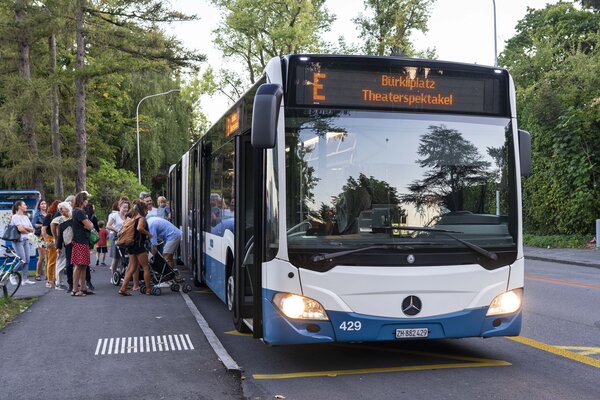
We have long encouraged sustainable travel options for our visitors. The festival site is very well connected to public transport. Festival tickets are also valid for travel within the Zürcher Verkehrsverbund (ZVV) on the day of the performance. Around 500 bicycle parking spaces are available on the festival site, and a nearby PubliBike station provides access to shared bikes.
The Zürcher Theater Spektakel is committed to being a festival for everyone and promotes access to culture for diverse audiences through an inclusive programme. The festival creates spaces for cultural exchange, social dialogue and shared experiences.
Inclusion and Participation
Alongside a varied and easily accessible programme offer, various measures and the continuous improvement of infrastructure support the participation of people with different needs. Almost all performances are surtitled, making them accessible to different language groups. With discounted ticket options as well as free suspended tickets, we aim to ensure that no one is excluded for financial reasons.
For years, we have been developing the festival as an inclusive and discrimination-sensitive environment. During the festival, an awareness team is present on site. Additional support is provided through a hotline and various retreat spaces for visitors, artists and staff.
Partnerships
Within our international festival network, we act as a committed partner for emerging artists and artists from the Global South. We seek to support them through co-productions, exchange programmes and opportunities for recognition through our ZKB Prizes.
Working Conditions
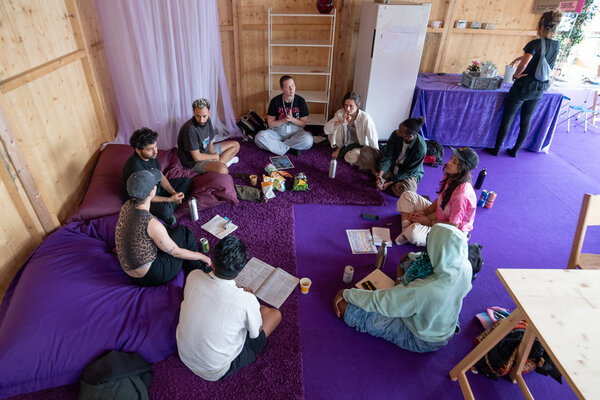
We are committed to fair working conditions for employees, temporary staff, partner organisations and artists. In personnel decisions, programme development and collaborations, we seek to ensure balanced gender representation and diverse perspectives. We actively promote a respectful, non-discriminatory and safe environment. All contracts include a Code of Collaboration. Regular training on inclusion, diversity, equality and anti-discrimination further strengthens a respectful working environment.
Further Development and Potential
An international festival on the scale of the Zürcher Theater Spektakel will always require mobility and inevitably generate emissions. For this reason, we continuously seek ways to improve.
At the same time, international exchange, the support of artists, cultural diversity and global perspectives remain central contributions of the Zürcher Theater Spektakel to Zurich’s evolving urban society. It is our goal to continue developing the festival’s role in response to the changing demands of our times.
Climate Report 2024
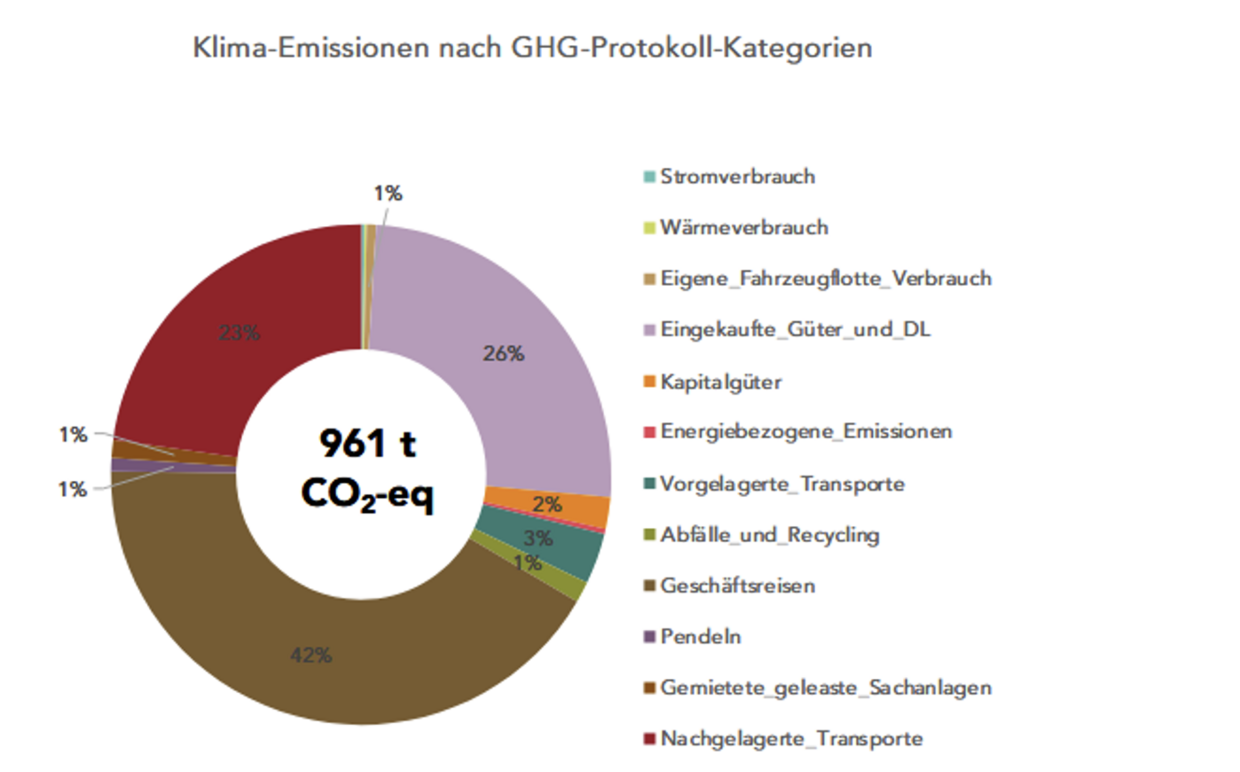
In winter 2024/25, the team of the Zürcher Theater Spektakel, together with the company Carbotech, created a climate report of the most recent edition of the festival. The result is both encouraging and challenging. The total amount of emissions is just over 960 tons of CO₂. That’s about 8 kg per visitor. According to myclimate, the per capita consumption in Switzerland is 12 tons per year. So, this is a pleasantly low figure (equivalent to approx. 50 km of car travel), both in absolute terms and compared to other festivals.
This number reflects the fact that the festival has been making efforts to reduce consumption for many years. The largest shares of total emissions come from artist mobility, gastronomy, and printed materials. This outcome was more or less expected and confirms that we should continue working on the levers we’ve already been targeting for years.